 Las Vegas, NV & Surrounding Areas

BATITO CONSTRUCTION GROUP · LAS VEGAS
Residential Roofing Installation & Repair Las Vegas
A roof project starts with the condition of your home, the roof system and the work needed. Batito Construction Group helps homeowners plan residential roofing installation and repair in Las Vegas, Henderson and surrounding Southern Nevada communities.
Request a Roofing ConsultationCall (702) 867-0187
Roof Installation for Homes
For new roofing or a replacement project, we review the roof layout, existing materials, transitions and site access before defining the installation scope. Material selection and the proposed assembly should fit the roof slope, building requirements and project goals. Tell us whether your project involves asphalt shingles, tile roofing or a low-slope section so the appropriate scope can be discussed.
Residential Roof Repair
Missing roofing material, damaged ridge details, worn transitions and water-entry concerns call for a focused review. A repair plan should consider the visible damage and the adjacent roof details rather than treating the surface patch as the whole project. Share photos and the affected locations so we can discuss the next step.
Shingles, Tile and Low-Slope Roof Sections
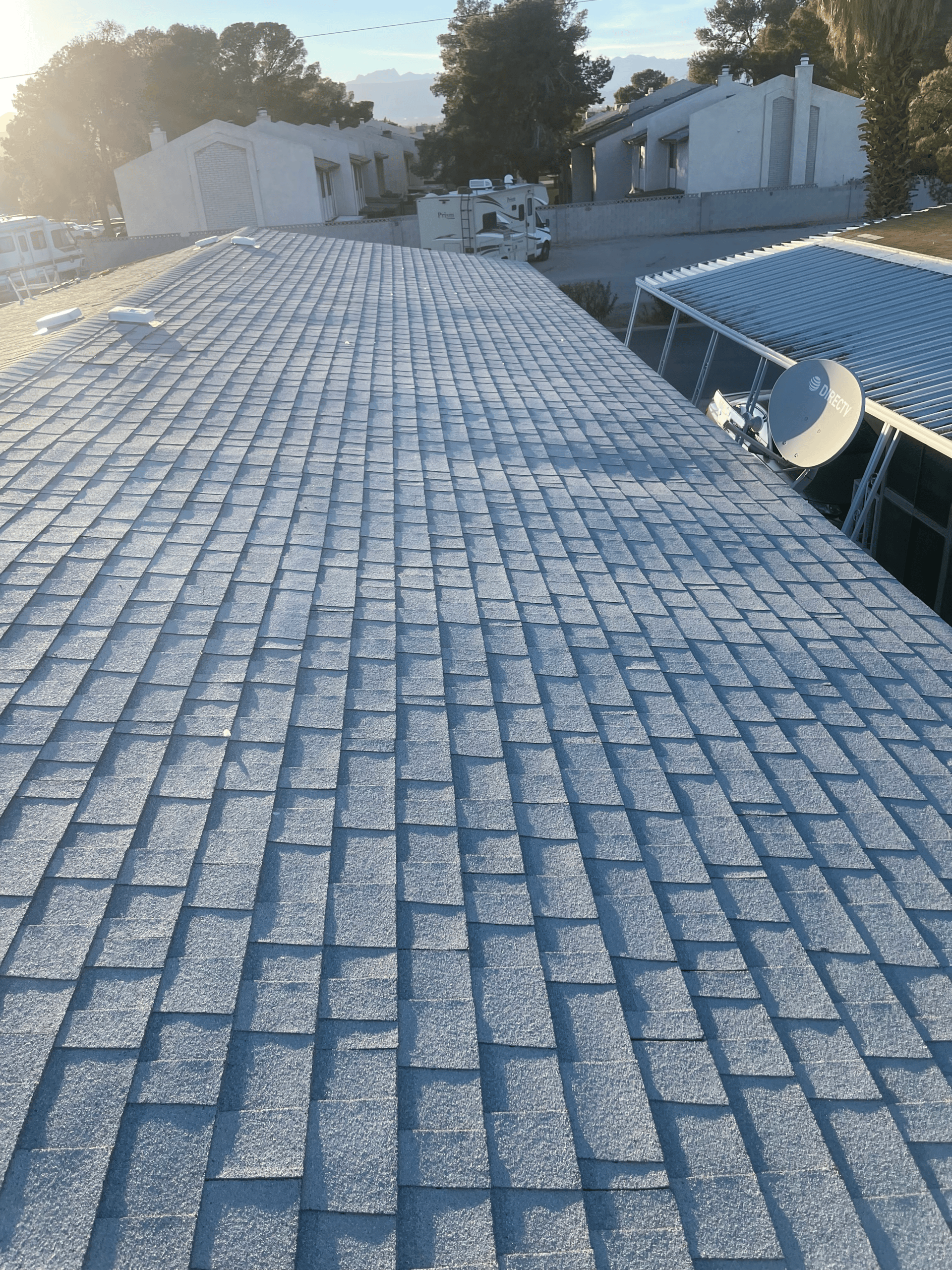
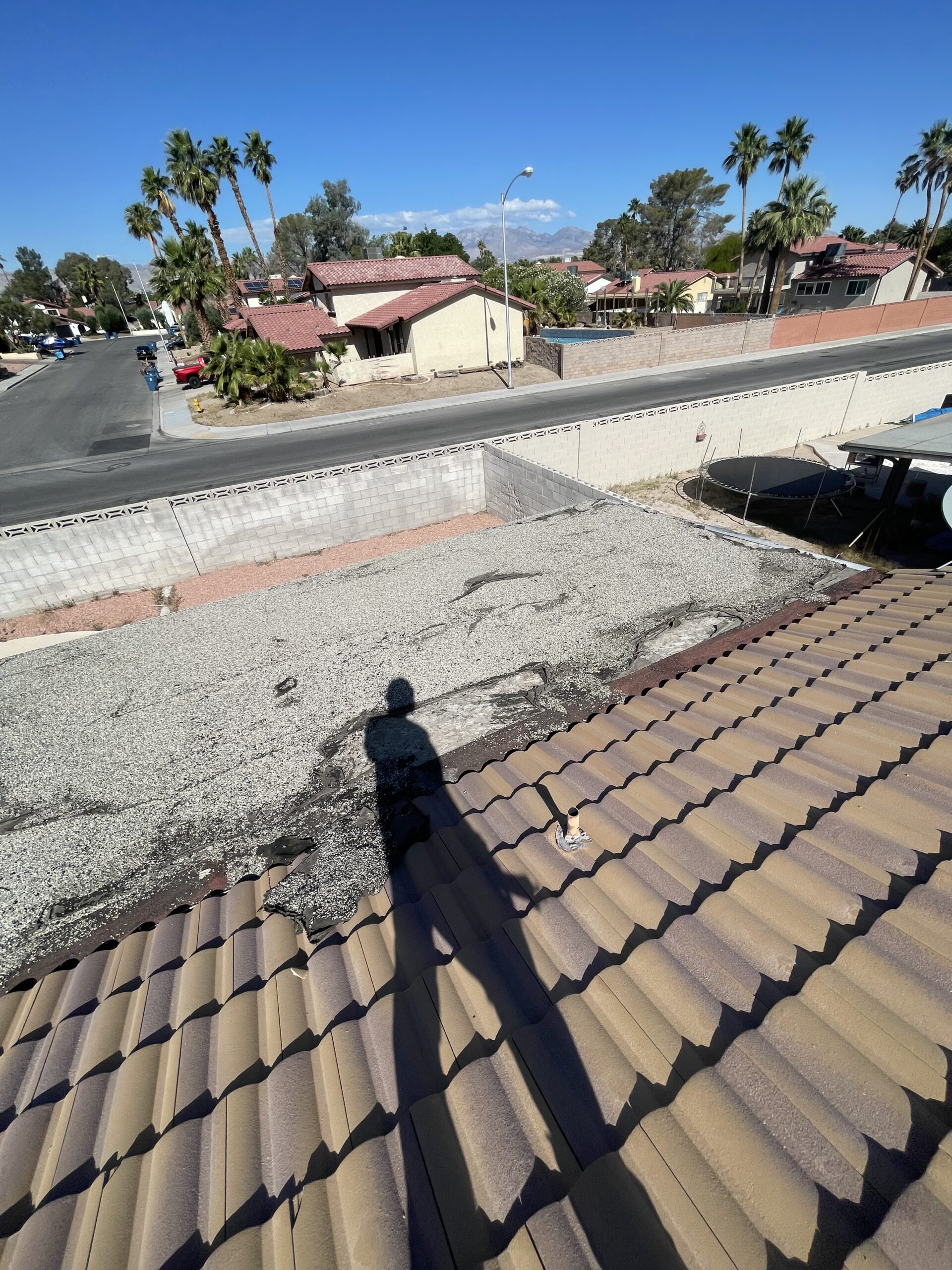
Homes can have more than one roof type, including a pitched main roof and a low-slope addition or patio area. These sections need to be considered together. Our photos show asphalt shingles and a tile-to-low-slope transition; the condition image is documentation before repair, not a completed restoration.
Repair or Replacement: Define the Right Scope
The decision depends on the extent of damage, the condition of the surrounding roof and whether a compatible localized repair is practical. We discuss the available information, access and project goals before providing a proposed construction scope. An estimate should clearly identify included work, material assumptions and any additional findings that may affect the project.
Roof Leak Repair and Replacement Planning
When requesting roof leak repair in Las Vegas, describe where moisture appears, when it occurs and any visible changes after wind or rain. Interior staining does not always identify the entry point directly above it; roof transitions, flashing and penetrations may need closer review.
For a roof replacement inquiry, include the roof material, approximate age if known and previous repair history. We can discuss a scope that considers removal, underlying conditions, new roofing and cleanup. The right installation or repair plan depends on the roof and findings at the property.
Planning wider property improvements? Explore commercial remodeling and concrete and site work, or contact us to describe your combined construction scope.
Roofing Photos and Project Details
Residential Roofing: Scope, Access and Completion Planning
Residential roofing: describe the problem before choosing the scope
Tell the reviewing team what prompted your request: a visible roof concern, an interior stain, a recurring leak or a planned broader replacement. Include the approximate location and any history of earlier repairs. Observations made safely from the ground can help start the conversation. The actual residential roofing scope should follow the assessment rather than a guess based on one photograph.
Ask which roof areas are included and what the proposed work is intended to address. A focused repair and a larger replacement involve different decisions about material matching, adjoining details and the limits of work. Request a clear description of what remains and what will be removed.
Residential roofing materials and adjoining roof sections
A home may have different roof materials or several connected roof sections. The images on this page show shingles and a transition between tile and a low-slope area. Those examples illustrate why the team should review the actual assembly and its interfaces before proposing work. One roof surface should not be assumed to describe the entire property.
Discuss the proposed material and its relationship to existing areas. Availability, weathering and earlier repairs can affect appearance. A residential roofing estimate should identify the product or clearly describe any allowance. Approve alternatives before materials are ordered, and keep the selection record with the estimate.
Residential roofing access and household coordination
Discuss how workers and deliveries will reach the property. Identify gates, parking limitations, landscaping and areas used by children or pets. Tell the team which spaces need continued access and whether another project is underway nearby. These details help organize protection and staging around the household’s actual routine.
Ask who will communicate daily access changes and which owner decisions are needed before work begins. A clear residential roofing plan should account for material storage, debris handling and cleanup as relevant to the agreed scope. Do not assume these activities are included simply because an estimate lists installation.
Residential roofing and interior damage are connected scopes
When a leak has affected interior finishes, identify who is evaluating the source and who is responsible for drying or rebuilding the affected rooms. Roof repair and ceiling restoration may be separate scopes. A clear handoff helps prevent interior finishes from concealing an unresolved condition or a remaining question about moisture.
For broader repair needs, discuss water-damage restoration and construction services. Keep the roof findings and interior observations organized by location. Residential roofing decisions are more useful when the owner understands how the different trades and repair stages relate.
Residential roofing estimate and change review
Compare proposals against the same affected areas and assumptions. Ask about preparation, removal, disposal, proposed materials, adjoining components and cleanup. Identify exclusions and any work that another provider must complete. An owner should be able to understand what the estimate includes without interpreting a single general sentence about roof repair.
Ask how a concealed discovery would be documented and priced. A proposed residential roofing change should explain the condition, the work being recommended and its effect on the sequence. Agree on who can authorize changes and keep the current scope together with approved revisions.
Residential roofing completion and owner records
At turnover, review the completed activities against the written agreement and approved changes. Ask about the product information and warranties actually supplied. Discuss remaining items and confirm the contact for follow-up. Review agreed cleanup and access restoration as part of the completion conversation.
Retain the residential roofing estimate, photographs and invoices with your home-maintenance records. If a concern develops later, note the location and observed condition clearly. An organized record supports a more focused discussion of the earlier work and the next appropriate assessment.
Residential roofing resources for Southern Nevada owners
Confirm the responsible jurisdiction and any project-specific review questions for your property. Official starting points include the City of Las Vegas and Clark County. Ask the project professionals what applies to the actual proposed work.
If the property is association managed, provide any current exterior appearance information available to you. Product or color selections may need separate owner coordination. Share your location, roof type and available records with Batito so the residential roofing consultation can focus on the conditions and decisions relevant to your home.

Residential roofing questions before a property visit
Gather the project address, available roof information and the location of any interior concern before the first conversation. Describe when the issue appeared and whether conditions are changing. Let the team know about access restrictions and any separate company already investigating the problem. Clear information helps the residential roofing visit focus on the correct areas and the questions that remain open.
Avoid entering unsafe areas or climbing onto the roof to obtain a photograph. Tell the reviewing team what information is available from safe locations and let the appropriate professionals determine the assessment needs. If you have older inspection reports or repair records, label them with their dates so they are understood as history rather than current findings.
Residential roofing choices and the next decision
At the end of the scope discussion, summarize the options being evaluated and the information needed to choose between them. Ask what each option includes, what remains unresolved and which selections affect purchasing. A residential roofing proposal should support a clear owner decision without assuming that every property needs the same repair package or replacement approach.
Keep the agreed next steps in writing. Identify the owner representative, the contact for scheduling and the person who can approve changes. If additional investigation is needed, establish what it is intended to clarify before a final scope is selected. This gives the household a practical plan and helps the residential roofing team coordinate work using the current information.
Roofing Project Questions
Can I request roof repair instead of a full replacement?
Yes. Tell us about the problem and send available photos. The proposed approach depends on the condition and whether a focused repair is appropriate.
Do you work on residential shingle roofs?
Contact us about asphalt shingle installation and repair. Our shingle roofing page explains the material-specific project details.
What should I send for an estimate?
Include the project city, roof type if known, affected areas, available photos and preferred timeline. Avoid climbing onto the roof to obtain pictures.
Serving Las Vegas and Southern Nevada
Discuss roofing work in Las Vegas, Henderson, North Las Vegas, Summerlin, Paradise, Spring Valley and Enterprise. Project availability and the appropriate roofing scope are confirmed when you contact our team.
See our construction and roofing gallery and storm damage repair services for related project information.
Let’s Discuss Your Roof
Send your project location, available photos, roof type and preferred timeline. We’ll discuss your installation or repair needs and the next step.
Request a Roofing Consultation(702) 867-0187Eight Residential Roofing Situations to Discuss Before Work
The examples below describe common questions owners can raise during a roof review. They are planning scenarios, not diagnoses of your home or photographs of completed repairs. A residential roofing proposal should explain the actual conditions found, the limits of the proposed work and any items requiring a separate professional review. Use the relevant scenario to prepare questions, then compare the answers with the written scope for your property.
Table of Contents
1. Residential roofing: A leak appears near a ceiling stain
Describe when the stain appeared and whether it changed during a particular rain or wind event. Provide views of the whole room and close details, along with any earlier repair records. Avoid assuming that the entry point is directly above the visible mark. A residential roofing assessment and an interior repair estimate answer connected but different questions. Ask which roof areas were reviewed, what observations support the proposed scope and what additional access may be needed. The proposal should distinguish source-related roofing work from drying, drywall, insulation, paint or other interior reconstruction.
2. Residential roofing: A porch roof meets the main house
Explain whether the concern involves the porch covering, the adjoining wall, a roof transition or the main house. Show any previous changes to the patio or enclosure so the review starts with the present arrangement. For residential roofing, the junction between assemblies needs a clear scope rather than a generic promise to patch the area. Ask which materials will be disturbed and restored, whether existing components will remain, and how adjoining finishes are addressed. If separate trades are involved, establish who coordinates their work and what is excluded from the roofing price.
3. Residential roofing: Tile and shingles appear on the same property
Identify each roof section by material and location before comparing proposals. A house may have different coverings over the main structure, an addition or a lower area. Photographs can help explain the layout, but they do not establish concealed conditions. A residential roofing scope should state which assembly is being addressed and how it relates to adjoining sections. Ask whether the proposal assumes existing materials can be reused, what happens if additional damage is exposed and how changes will be documented. Keep material descriptions specific so repair discussions do not mix different roof systems.
4. Residential roofing: Rooftop equipment affects the work area
Tell the team about solar panels, cooling equipment, satellite equipment or other roof-mounted installations before planning access. Share known ownership or service-provider information, especially if a separate company controls removal, resetting or testing. Residential roofing work around equipment should have defined responsibilities. Ask which activities are included in the roofing agreement and which require another provider. Discuss the order of work and how completion by one party is communicated to the next. Avoid assuming a roof proposal automatically includes equipment-related electrical, mechanical or warranty services unless those activities are expressly described.
5. Residential roofing: Only part of the roof is proposed for repair
Ask the reviewer to identify the repair boundary using a roof sketch, clear photographs or another understandable reference. A partial residential roofing project should explain the affected section, related transitions and the condition assumptions used for pricing. Discuss why a limited scope is proposed and what questions remain about areas outside it. Request a description of the work rather than a guarantee that unrelated parts of an aging roof will never need attention. If broader replacement is also presented, compare the alternatives using the same property information and clearly separated inclusions.
6. Residential roofing: Replacement would affect daily household access
Identify parking, gates, pets, deliveries and the rooms or outdoor areas used throughout the day. Tell the project team about any household member who needs an accessible route or a predictable access arrangement. Residential roofing planning should account for where materials and equipment will be staged and how work boundaries will be communicated. Ask how schedule changes are shared and which owner preparations are needed before arrival. Discuss protection and cleanup within the written scope. A practical access plan is easier to follow when it refers to specific locations around the house.
7. Residential roofing: An earlier repair did not resolve the concern
Share the earlier proposal, photographs, invoice and any written description of what was changed. Mark the previously repaired area separately from the new symptom so the review does not begin with an incorrect assumption. A second residential roofing opinion should explain the observations behind its recommendation. Ask whether the suspected issue is within the previous repair, at an adjoining detail or in another roof area. Keep the discussion focused on documented conditions and the proposed work. If opening an assembly is necessary to clarify the scope, agree on authorization and reporting before that activity proceeds.
8. Residential roofing: You are comparing repair and replacement prices
Request separate descriptions for each alternative, including preparation, removals, materials, adjoining details, disposal and closeout. Identify allowances and conditions that may change the price. For residential roofing, a low total is difficult to evaluate if it leaves the actual assembly or work boundary unclear. Ask what product and workmanship documentation will be provided and which warranty terms apply to the proposed work. Review the final decision with the property-specific findings in hand. Keep the accepted scope, selections and subsequent approved changes together for the completion walkthrough and future maintenance discussions.