 Las Vegas, NV & Surrounding Areas

BATITO CONSTRUCTION GROUP · LAS VEGAS
Commercial Roofing Installation & Repair Las Vegas
Commercial roof work needs a plan for the building and the people using it. Batito Construction Group reviews commercial roofing installation and repair projects in Las Vegas and Southern Nevada, with attention to site access, existing roof conditions and coordination around rooftop equipment.
Request a Roofing ConsultationCall (702) 867-0187
Commercial Roof Installation Planning
For a new roof or replacement scope, we review available plans, the existing roof assembly, roof layout and building operations. Material and system choices should be confirmed for the actual building and proposed work. We define the construction scope and coordination requirements before scheduling an installation.
Flat Roof Repair and Perimeter Details
Low-slope roofs include seams, roof-to-wall transitions, parapets, penetrations and equipment curbs. A repair review should consider these details together with the surrounding roof surface. Share the locations of water-entry concerns or damaged material so the repair scope can be evaluated.
Rooftop Equipment and Occupied Buildings
Cooling equipment and other rooftop components can affect access and sequencing. We discuss coordination requirements, staging and the areas affected by the proposed work. Property managers and business owners can share operating hours and access restrictions so they are considered during project planning.
Document Existing Conditions Before Work
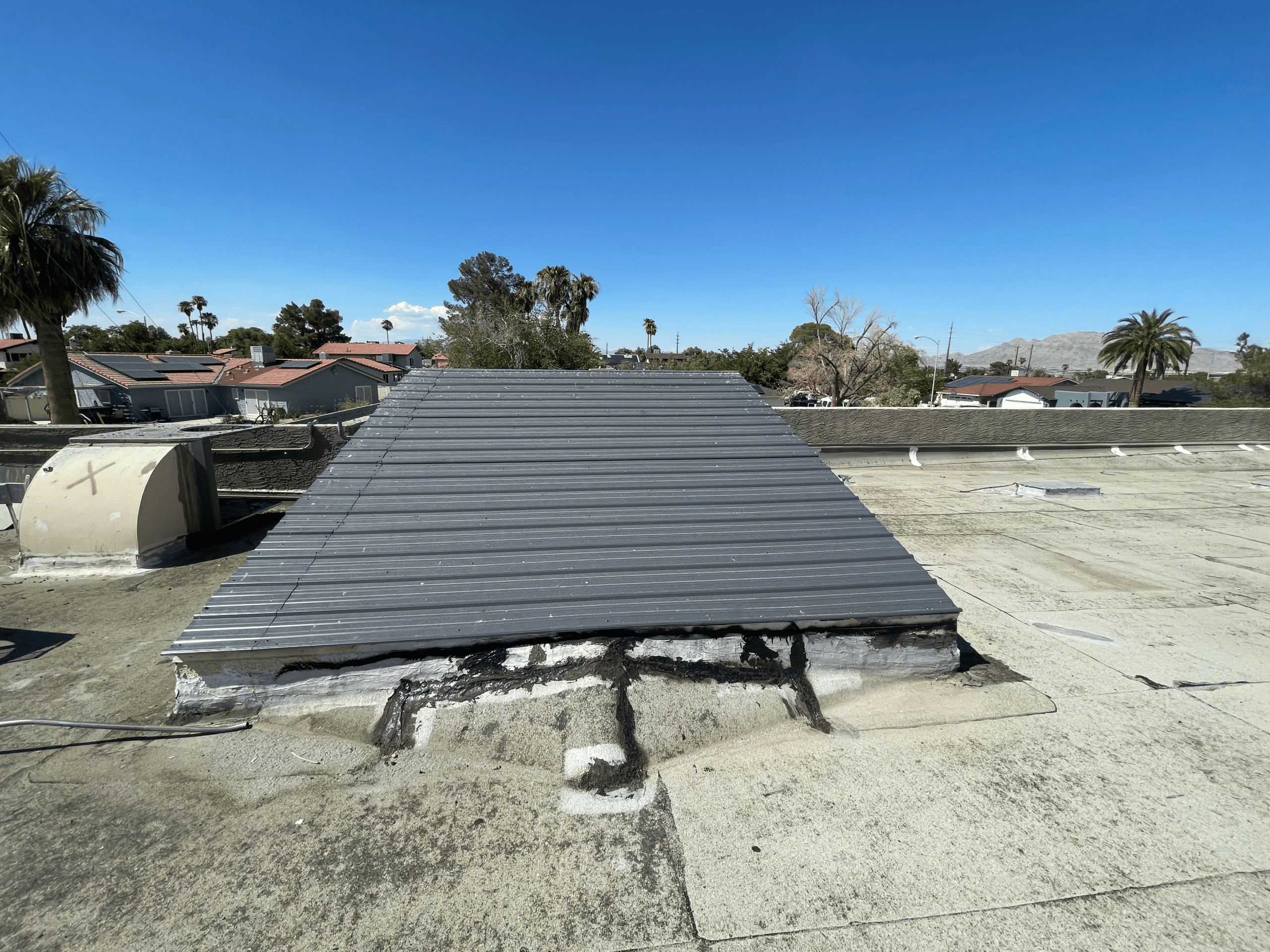
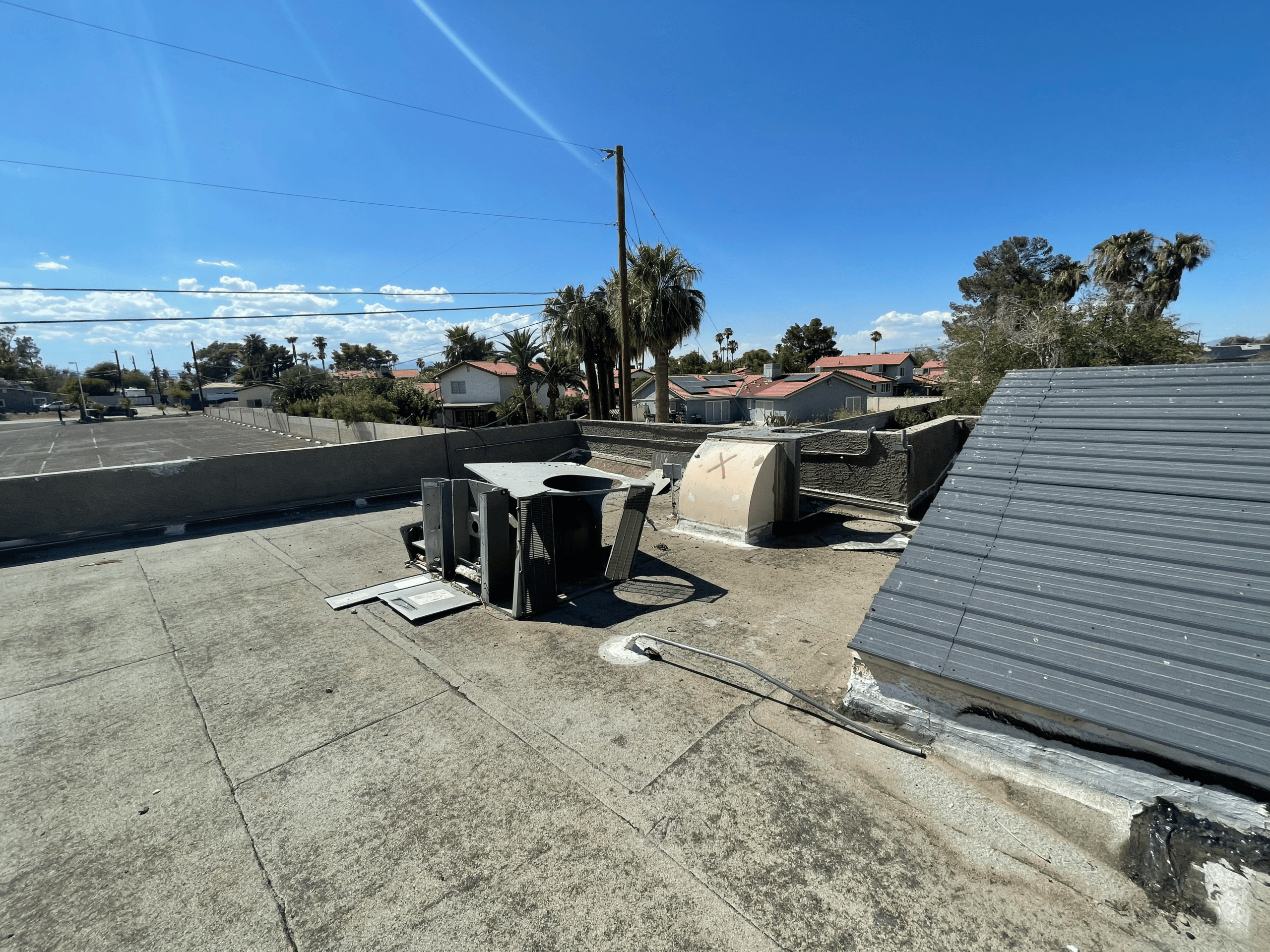
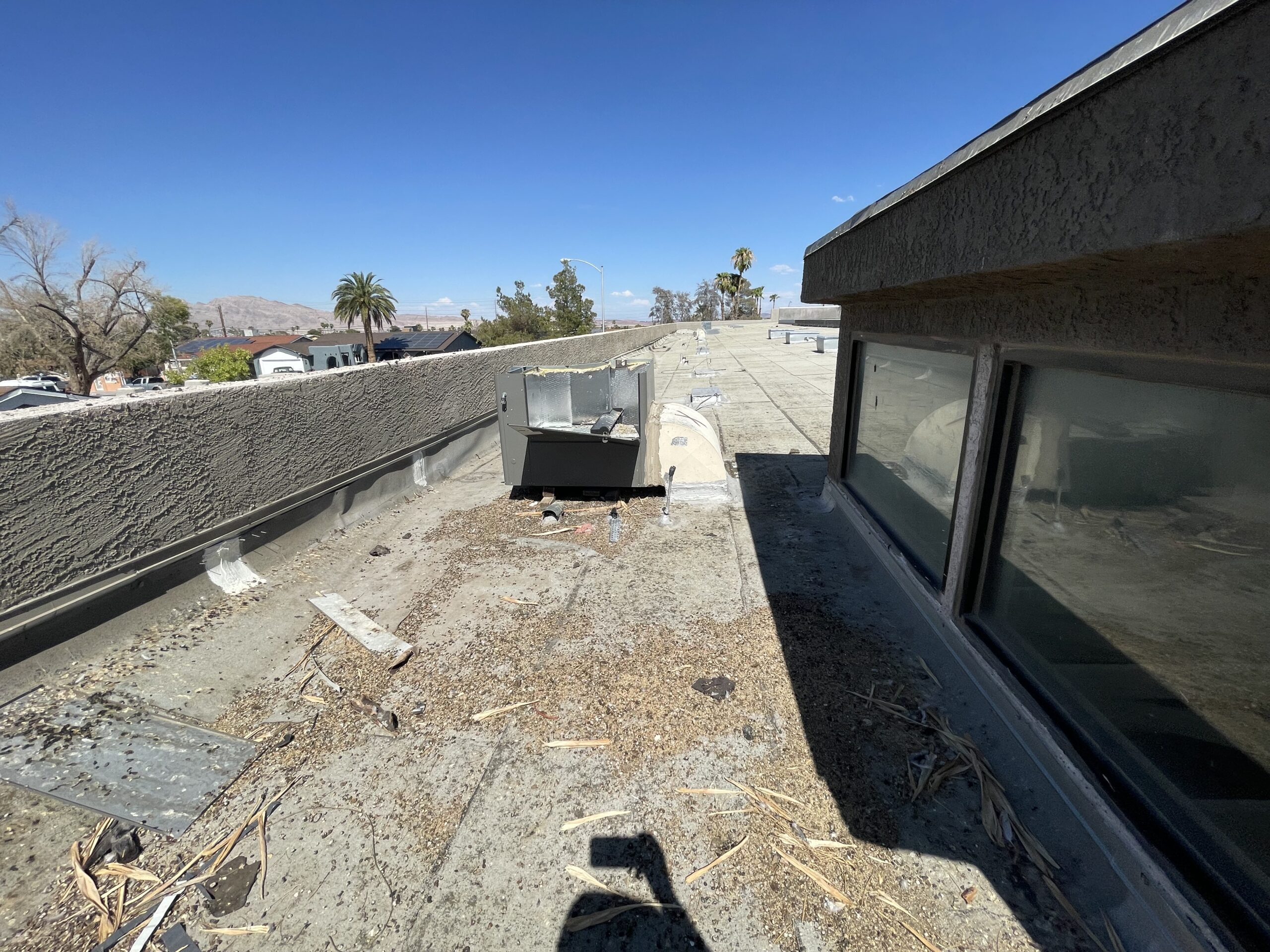
The commercial photos on this page show existing flat-roof surfaces, rooftop equipment and perimeter conditions. They are assessment records, not photographs of a completed roof replacement. A clear record helps identify proposed work areas and supports conversations about repair priorities.
Roofing Photos and Project Details
Commercial Roofing: Scope, Access and Completion Planning
Commercial roofing starts with the building’s operating needs
Tell the team how the building is used and which activities must continue during the proposed roof work. A customer-facing business, a storage facility and an office may have different access and coordination needs. Identify the owner representative, building manager and tenant contacts who need updates. Commercial roofing planning should connect the roof scope with the people and operations below it.
Record delivery routes, parking restrictions, material-staging areas and any access controlled by management. If shared property or neighboring suites are involved, identify the responsible contacts before scheduling. The goal is a practical plan based on the building’s actual conditions rather than assumptions about an empty site.
Commercial roofing documentation and existing conditions
Gather available roof records, prior estimates, photographs and information about earlier repairs. Tell the reviewing team where leaks or other concerns have been observed and when they occur. Interior observations can help organize questions, but they do not prove the roof entry point. A useful assessment separates known conditions from items requiring further investigation.
Organize records by roof section and affected interior location where possible. For a multi-tenant property, identify the suite and management contact for each reported condition. This structure helps the commercial roofing team communicate what has been reviewed and which areas remain unresolved before a proposal is finalized.
Commercial roofing around equipment and penetrations
Rooftop equipment, curbs, drains, parapets and service access can influence the proposed work. Ask which components are included in the commercial roofing scope and where another trade must participate. Confirm responsibility for moving, protecting, disconnecting or reconnecting equipment when applicable. A proposal should make these interfaces understandable to the owner.
The roof photographs here document existing conditions and equipment relationships; they do not establish a completed repair or a universal specification. Review the actual assembly and proposed materials with the responsible team. Keep agreed details and exclusions in the project record so later work does not proceed from conflicting assumptions.
Commercial roofing repair and replacement comparisons
Request a description of the roof areas involved, the condition being addressed and the limits of the proposed work. A localized repair, a restoration scope and broader replacement should each be evaluated on their own stated assumptions. Ask what remains in place and what information is still needed before the final approach can be confirmed.
When comparing commercial roofing proposals, align the roof areas, quantities, material descriptions and adjoining work. Identify disposal, protection, cleanup and any owner responsibilities. A lower total can describe a different scope. Clear written descriptions make the comparison more useful than judging proposals only by a price per square foot.
Commercial roofing changes and schedule coordination
Agree on how findings during authorized opening or removal will be documented. A change request should identify the condition, proposed activity and effect on price or sequence. Establish who is authorized to approve it. This is especially useful when a property has several tenant representatives or separate facilities and ownership teams.
The commercial roofing schedule should identify dependencies such as materials, access arrangements and work by other trades. Ask for updates when those assumptions change. Coordinate any proposed interruptions with the responsible parties instead of assuming that an early construction duration settles every operational question.
Commercial roofing turnover and maintenance records
Use the written scope and approved changes during the completion review. Discuss remaining items, cleanup and the records included with the work. Request product information, maintenance guidance and warranties actually provided for the installed materials and activities. Clarify the contact and process for reporting a concern after turnover.
Keep the commercial roofing documentation with the building’s facilities records. An organized history can help future assessments and coordination around rooftop equipment. Ask other service providers to respect the completed roof work and document any later changes through the appropriate property-management process.
Commercial roofing project resources and next steps
For official planning and permit starting points, use the City of Las Vegas and Clark County resources. Confirm the jurisdiction and project-specific requirements for the address with the appropriate professionals.
Related services include commercial facility repairs, capital improvements and commercial remodeling. Share your building use, roof concerns and available records when requesting a commercial roofing consultation.
Preparing a Commercial Roofing Bid Package
For a property with several roof sections, prepare a simple location list that connects each reported concern with the relevant area. Include available plans, maintenance history and existing photographs. State which documents describe current conditions and which come from earlier work. Clear labeling helps the reviewing team avoid treating an outdated drawing or a photograph of another roof section as the current project information.
Identify the people who can answer questions about ownership, tenant access and building systems. A commercial roofing proposal may depend on information held by different parties. Agree on a shared contact process so questions are recorded and answered consistently. Keep the same information available to each team reviewing the opportunity so estimates are based on comparable assumptions.
Separate required work from options the owner wants evaluated. For example, a proposal may distinguish a specific repair area from a broader improvement alternative. Ask the team to explain what additional information is needed before recommending an approach. A commercial roofing estimate should make the proposed scope and its limitations understandable rather than present several prices without explaining their differences.
Before authorizing work, review unresolved items with the project team. Assign responsibility for each answer and identify any activity that must wait. Keep the current proposal, approved selections and authorized changes together. This gives property managers and owners a practical reference throughout the commercial roofing project and at turnover.
Commercial roofing questions for a multi-tenant property
List the tenant contacts, operating restrictions and access arrangements that affect the proposed work. Confirm which requests must go through building management and which can be discussed directly with the occupants. Different suites may have different needs even beneath the same roof. A commercial roofing access plan should identify these differences before deliveries or work activities are scheduled.
Keep roof observations and interior reports organized by area. When several people report a concern, a shared location reference can prevent the same issue from being counted twice or a separate issue from being overlooked. Record the person who supplied each observation and whether the area is available for assessment. The reviewing team can then describe which questions it has addressed and what remains unresolved.
Commercial roofing communication during construction
Agree on the format and frequency of project updates appropriate to the scope. Useful updates explain completed activities, upcoming access needs and decisions required from the owner. They should identify changes to the planned sequence and the reason for them. A commercial roofing project benefits from a clear owner representative who can coordinate responses without conflicting instructions reaching the field.
At turnover, request a list of the records included with the work and the contact for follow-up. Keep approved changes with the original scope so the building file describes what was actually authorized. If another service provider later needs roof access, use the property’s normal coordination process and retain records of changes. This helps future commercial roofing assessments begin with an understandable maintenance history.
Roofing Project Questions
What information helps you review a commercial roof project?
Send the property location, building use, available roof plans, photos, known roof system, access requirements and preferred schedule.
Can roof work be planned around building operations?
We discuss access, staging and operating requirements as part of the proposed scope. The sequence depends on the building and the work.
Do these photos show finished commercial roof installations?
No. These photos document existing rooftop conditions for repair and installation planning. Completed work should be identified separately.
Serving Las Vegas and Southern Nevada
Discuss roofing work in Las Vegas, Henderson, North Las Vegas, Summerlin, Paradise, Spring Valley and Enterprise. Project availability and the appropriate roofing scope are confirmed when you contact our team.
See our construction and roofing gallery and storm damage repair services for related project information.
Let’s Discuss Your Roof
Send your project location, available photos, roof type and preferred timeline. We’ll discuss your installation or repair needs and the next step.
Request a Roofing Consultation(702) 867-0187Eight Commercial Roofing Coordination Scenarios
A commercial roof is part of a building with occupants, equipment and operating requirements. These scenarios help owners and managers prepare a more useful project brief. They do not replace a roof inspection or establish what system your building needs. For commercial roofing, decisions should connect the observed roof conditions to access, building operations and the written scope. Select the scenarios relevant to your property and ask for project-specific answers before authorizing work.
Table of Contents
1. Commercial roofing: Multiple tenants share the same roof
Identify the owner, management representative and tenant contacts who need construction information. Explain which suites are below the proposed work and whether any tenant has time-sensitive operations. Commercial roofing coordination should establish who can approve the scope, control access and receive updates. Discuss the boundaries of communication so individual occupants do not unintentionally direct changes outside the agreement. If roof access passes through a tenant’s premises, arrange that requirement early. A written contact list and clear approval responsibility help the field team resolve questions without relying on informal instructions from whoever happens to be present.
2. Commercial roofing: Equipment service overlaps with roof repairs
Provide available information about rooftop units, exhaust equipment, access ladders and any separate maintenance providers. Explain whether another project is planned at the same time. A commercial roofing proposal should distinguish roof-system activities from mechanical, electrical or equipment-related services. Ask who is responsible for disconnecting, moving, resetting and testing any affected installation when those tasks are needed. Record the handoff points and the assumptions behind the schedule. Separate vendor work should remain visible in the project plan so an unfinished equipment activity is not mistaken for completed roofing coordination.
3. Commercial roofing: Leaks affect an occupied suite
Record the reported location, date, operating impact and available photographs for each incident. Identify whether interior work has already been performed and whether neighboring spaces reported related concerns. Commercial roofing review should address the roof observations without assuming that the visible interior mark defines the entire repair. Ask for a clear explanation of the proposed work and the information still needed. Coordinate any separate interior restoration with the appropriate parties. Management should understand which vendor is documenting the roof condition, which is addressing interior materials and who communicates changes to the owner.
4. Commercial roofing: A roof area drains toward shared details
Ask the reviewer to identify the relevant roof sections and describe the observed condition at drains, edges, parapets and adjoining assemblies. Share known maintenance records and previous reports of standing water or recurring leakage. Commercial roofing scope discussions should make those relationships understandable rather than treating a single visible patch as the whole project. Request a description of included work and any further evaluation proposed. Do not assume that a surface treatment alone addresses every drainage or underlying condition. The final proposal should state its assumptions and distinguish roofing work from separate building-system changes.
5. Commercial roofing: A building-wide renovation is already planned
Show the roofing team the relevant renovation drawings and explain which exterior or rooftop activities are expected from other trades. New equipment, penetrations, exterior finishes or access changes can affect construction sequencing. Commercial roofing decisions are easier to coordinate when the roof scope is reviewed alongside those plans. Ask whether proposed roof work should precede or follow related activities and what conditions each trade needs before starting. Keep one current drawing set and a written change record. A renovation schedule should identify the actual dependencies instead of assuming every vendor can proceed independently.
6. Commercial roofing: Deliveries and access must remain available
Describe loading areas, customer routes, service access and times when deliveries are especially important. Identify any route controlled by security or building management. Commercial roofing planning should discuss staging and work boundaries using a site-specific arrangement. Ask how proposed access restrictions will be communicated and who coordinates changes with occupants. Include protection and cleanup expectations in the scope. If a special operation cannot be interrupted, explain that requirement before the schedule is agreed. The project team can then discuss feasibility and sequencing with the constraint visible to everyone involved.
7. Commercial roofing: Repair alternatives have different exclusions
Compare the proposed assemblies, preparation, removals, transitions, equipment coordination and closeout information. An estimate for a limited repair is different from a proposal for broader restoration or replacement. A commercial roofing comparison should identify what each price actually covers and what remains outside the scope. Ask how concealed conditions or additional affected areas would be handled if discovered during authorized work. Separate product choices from assumptions about existing conditions. Keep questions tied to the written proposal so the owner can make a decision based on comparable activities rather than general descriptions.
8. Commercial roofing: The facility team needs useful closeout records
Discuss the information needed for future roof access, maintenance and vendor coordination before the project reaches completion. Review the authorized commercial roofing scope during the walkthrough and record remaining items by location. Request product information, included warranty documents and any other agreed records. Confirm the contact for reporting concerns and the responsibilities of separate service providers. Keep roof work documentation with the building’s other facilities records. A clear handoff helps a new manager or maintenance provider understand the work performed without having to reconstruct the scope from an invoice total alone.